
Almost all of us will face some sort of hazardous substances at work or during our daily life. It’s important that we understand how to deal with the risks of potentially dangerous chemicals. The idea of dangerous substances can conjure up pictures of science laboratories and radioactive waste. However, the bulk of them are more everyday things like cleaning products, bleach and paint.
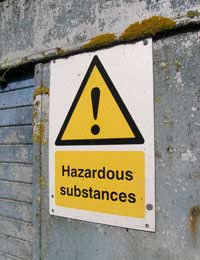
The risks can be found everywhere from hair salons and workshops, to factories and offices. However, workers are protected from exposure to dangerous substances by a number of European Laws. That means it’s important for all employees to be trained in proper h
Most of the chemicals faced in the workplace aren’t harmful at all if they are used properly. However, some will need more careful treatment than others because of their properties.
Hazardous Substances Examples
A hazardous substance can be anything that could potentially cause you harm, including many everyday products such as glue and paint.
The legal definition covers any liquid, solid, gas, chemical or biological material that could pose a risk to workers’ health and safety. There are around 100,000 different dangerous substances recognized across Europe, with almost every workplace facing some sort of exposure risk.
Hazardous substances that may be found in the work setting include:
- Cleaning chemicals.
- Glue, paint, varnish and oil.
- Petrol.
- Solvents.
- Liquefied Petroleum Gas (LPG).
Some further risks can be created as a result of processes in the workplace – for example welding fumes or Wood Waste can cause serious health problems for staff.
What Are The Risks?
Depending on the type of hazardous substance and the type of exposure, the risks faced by workers can vary a lot. The harm caused by these materials can range from minor skin complaints, all the way to chemicals that cause serious diseases like Cancer.
The effects of hazardous substances include:
- Skin problems.
- Asthma and breathing problems.
- Cancers.
- Asbestos-related Disease.
- Poisoning.
Handling Hazardous Substances at Work
The majority of chemicals found in the average workplace will only pose a very minor threat. These threats can be reduced even further by following some basic safety rules.
As with all health and safety issues you should carry out a risk assessment to see what problems could arise. This will let you see how you can minimise the chances of an accident.
A comprehensive risk assessment should include:
- A look at the substances that could harm workers. You should try to identify all the potential hazards in the workplace.
- Further information on all the substances in the workplace and the harm they could cause.
- The levels of exposure that workers face.
- Any training or instructions that could help reduce risks.
- A rank of the levels of risk looking at the chance of workers being exposed, and the harm it would cause.
- Procedures that reduce the risks faced by staff.
If you are worried about working with dangerous substances you should check the procedures and health and safety polices at your workplace.
Safe Storage Hazardous Substances
The main issues for most work environments will be the safe handling and storage of common substances found in workplaces.
All chemicals or cleaning agents should be clearly marked and stored in a locked area, COSHH Cabinet or Flammable Cabinet. They should also have the appropriate warning and hazard labels attached.
You should always use the proper equipment and any protective clothing provided, while obeying any safety precautions advised by your employer.
Workers in many sectors are protected by European law which limits exposure to certain chemicals. The law also provides regulations for dealing with them.


Hi work on the highways and we work both days and nights, although we are busy throughout the year on both and the company have enough people here to cover the workload I’ve been on nights constantly since last year. The last time I done a day shift was 17th of July 2020. Everytime I ask for days the following week I’m told that I’m needed on nights. It’s now taking its toll and need some advice.
I have COPD and work in a plastics manufactures (Extrusion) our roof fans have not worked for months now and i am feeling the affects of the fumes which you can actually see moving in the roof space.I mentioned this to my Health and Safety officer and he assured me it was being dealt with and they have indeed purchased new fans,this was 2 months ago but still they have not been fitted.Any production problems are dealt with immediately but the fans are on hold..i am now off sick with a chest infection…I am not happy going back into that environment..can i sue? can they sack me?
@Micky – ASk your doctor to write a note about the work environment and questioning when the fans will be fitted. That might give the employer the extra incentive to get the job done.