
Car fires in the UK are not all that common, but they have the potential to spread quickly. It is wise to always have a car fire extinguisher in your vehicle.

300 cars per day go up in flames in the UK. 65% of these fires are linked to criminal activity, but the statistics are still stark. Vehicle fires have the potential to escalate quickly, and 100 people per year are killed as a result.
Source: Fire Service UK Vehicle Fires Statistics
Often, once a car fire takes hold, it will be completely burnt out before the emergency services reach the scene.
It is a sensible precaution for all car owners and vehicle drivers to own a fire extinguisher. There are, however, some drivers who legally require one. This guide looks at who must carry them, why they are needed, and the best fire extinguisher to get for your vehicle.
What is the Best Fire Extinguisher for a Car?
Car extinguishers are compact, making them suitable for even the smallest of vehicles. You must carry one suitable for handling a car fire and that is a manageable size for your car.
The most common types of car fires are Class A, B and C so it makes sense to have an extinguisher that covers all 3.
Find the Right Fire Extinguisher for Cars
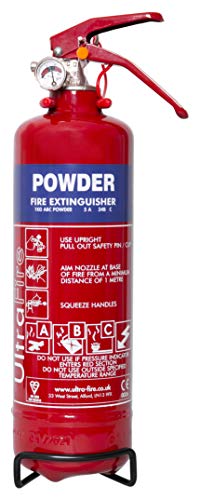


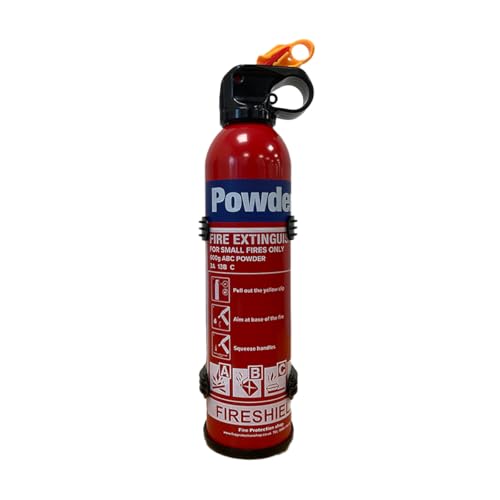
Dry powder extinguishers, commonly known as ABC, are made to handle all of these fire types. Therefore, having one in your car will give you extra protection in the eventuality of a fire outbreak.
A small fire extinguisher is all you need for your vehicle and some come with the mounting frame too. Having it mounted will ensure it remains in one place and therefore, won’t roll around and get damaged. Ideally, they should be kept in the boot of the car and out of direct sunlight.
What Size Fire Extinguisher Do I Need For My Car?
Small fire extinguishers are perfectly sized for storing safely in cars. Their compact size means they are easy to hold and do not take up much room.
- For larger cars and vehicles you should purchase a 2kg powder extinguisher.
- Smaller cars will be more suited to a 1kg powder extinguisher.
Powder Fire Extinguishers & Car Fires
By purchasing a powder fire extinguisher, you are covered for all types of car fire risk.
- Class A car fires are caused by wood, paper or fabric.
- Class B car fires are caused by inflammable or combustible liquids such as petrol.
- Class C car fires are caused by flammable gases.
Your best choice of fire extinguisher for the car is a powder (ABC) one as this will tackle all vehicle fires. You can also use a multi foam fire extinguisher which will tackle a car blaze and is suited to use in a small, confined space.
See Also: Fire Extinguisher Colours – A comprehensive guide to extinguisher label colours.
Electric Car Fires
You are much less likely to experience a fire in an electric car but this doesn’t mean you should become complacent.
Due to the fairly new emergence of electric cars in the UK, it is difficult to gauge how much of a risk fires are. However, with the increasing popularity of their use, it is essential to remain aware of the potential dangers.
One such danger and fire hazard of an EV is the lithium ion battery used to power the cars. If the battery is damaged in any way, including getting overheated, then there is a risk of it catching fire. Fires in electric cars are very rare with the data being gathered so far but they are highly dangerous.
When a fire takes hold inside an electric car, this releases over 100 organic chemicals, some of which are fatal to humans. Two examples of these harmful gases include carbon monoxide and hydrogen cyanide.
What Fire Extinguisher For An Electric Car?
Research has indicated that water is the best type of fire extinguisher for an electric car.
However, the water required to effectively put out an electric car fire is copious – far more than you will have to hand. Often, however, the emergency services will opt to let the fire burn out itself while protecting the immediate vicinity.
The problem with car fires is their potential to reignite, sometimes days later. The fire, therefore, has to be carefully observed for any signs of reignition. Fire services will sometimes choose to use a foam extinguisher but often, water is the preferred method.
Car Fire Extinguisher Law
Car fire extinguisher laws in the UK state that private cars do not need to carry them, however commercial vehicles must.
Here are the requirements for extinguishers in commercial vehicles:-
Taxis & Private Hire Vehicles
All taxis and private hire vehicles must carry an appropriate fire extinguisher.
The local authority sets out the regulations that taxis and private hire vehicles must adhere to. The specifications come down to how many people the particular vehicle can carry. It is necessary, therefore, to check with your local licensing authority first.
In the UK, you should aim to keep a 1kg or 2kg fire extinguisher in smaller taxis. These are sufficient for dealing with fires on this scale.
For larger vehicles, capable of holding 9 or more passengers then it is a requirement to carry a fire extinguisher for taxis. This should be at least 2 litres and preferably, a foam variety. There is also a legal requirement to make sure taxis carry a first aid kit along with the extinguisher.
See Also: Mounting car fire extinguishers – how and where to secure an extinguisher safely in a personal or company vehicle.
Public Transport
Public transport is required to carry a fire extinguisher on all vehicles.
The size of the extinguisher will depend on the vehicle type and whether it has wheelchair access too. It is vital to check with the local authority as well, they often have their own set of rules.
Commercial Transport
Commercial vehicles must carry a fire extinguisher by law.
This includes vans, lorries, tractors, and any other vehicle weighing 3.5 tonnes or over. A 2kg dry powder extinguisher is sufficient and it should be stored securely.
HGVs
It is recommended for HGVs not carrying dangerous goods to store and use an ABC (dry powder) fire extinguisher.
For those HGVs that have dangerous goods, they have specific rules to adhere to. The CDG and ADR regulations set out the specifics for the size of the extinguisher based on the vehicle tonnage.
Domestic Vehicles
There are no laws requiring domestic vehicles to carry fire extinguishers. But it is still sensible to have one on board at all times.
Water mist extinguishers are best for caravans and motorhomes as they can tackle a range of fire types. You should generally avoid using dry powder in these vehicles due to the confined space.
It is important to be aware that some countries make it a requirement for vehicles to have a fire extinguisher and a first aid kit. When holidaying in a different country, you will need to check out their specific regulations.
Fire Extinguishers & Company Cars
It is only recently that the somewhat misleading advice concerning the fire regulations for business vehicles has been cleared up.
It is not a legal requirement for company cars to carry a fire extinguisher. However, it’s essential for employers to carry out a risk assessment. The old belief that business cars are considered the workplace has long since been left behind. As such, it is not obligatory for the rules set out in FS02005 to be followed in company cars.
However, all employers have a duty of care towards all their employees and ensuring fire safety is part of this. Having a fire extinguisher available in all company cars is a responsible move to make.
How to Use an Extinguisher on a Car Fire
Car fires can be very scary and can escalate quickly so having an idea of how to use an extinguisher will help.
- Firstly, remain calm, put your hazard lights on and pull over to safety.
- Pop the bonnet and switch off the engine.
- Ensure your passengers and yourself get out of the car safely and to a safe distance away.
- Ask someone to call 999 or you do this first.
- If the fire is small and at the front, you can go into the boot to retrieve the extinguisher.
- If it is safe to do so you can lift the bonnet and aim the extinguisher on the fire.
- Pull the release pin and press down on the lever.
- Aim the nozzle at the base of the fire and keep spraying the fire.
- Use the entire contents of the extinguisher.
- Watch out for signs of reignition until the fire service turns up.
How To Prevent A Car Fire
There are some practical ways you can help keep your car safe and prevent the risk of a car fire. By following the steps below, you keep the potential of a care fire low.
- Make sure the service and MOT are kept up to date every year.
- Never ignore warning lights.
- Keep an eye on the tyres for signs of wear and tear.
- Check the oil and coolant levels.
- Drive responsibly at all times – car crashes make up a large percentage of car fires.
- Keep your car interior clean and clutter free.
- Make sure stereos are fitted by a professional.
- Keep inflammables out of the car.
- Regularly check the condition of the car battery.
- Carry a car fire extinguisher.
FAQs
It is an extremely sensible idea to keep a fire extinguisher in your car at all times. They are small and do not encroach on the space available. Car fires can happen at any time and can also be very unpredictable. Having a fire extinguisher can save lives.
You should aim to keep your fire extinguisher in the boot of your car. It should remain out of direct sunlight at all times and if possible. secured using a mount. This will prevent the extinguisher from rolling around and potentially becoming damaged.

